
Free webinar recording with captain Sergy
Sailing the Exotics: webinar recording
The British Virgin Islands in January, the Seychelles in February. Two winter weeks on a catamaran, and captain Sergy’s honest guide to which one is yours.
Webinar recording
Watch the full webinar
In this free 52-minute webinar, captain Sergy Almer, founder of Elmár Sailing and an RYA & ISSA licensed skipper, and Eva from the Elmár Sailing team compare the company’s two exotic winter sailing weeks: the British Virgin Islands in the Caribbean in January (16–23 January 2027) and the Seychelles in the Indian Ocean in February (20–27 February 2027). Both are one-week trips on a catamaran with a small, invite-only group. No sailing experience is needed, and around 80% of guests come solo. The recording covers both routes island by island, life on board, the local chef who cooks every meal in the Seychelles, which week suits whom, a story from Niall, a past guest who has sailed with Elmár Sailing six times, what’s included, and how booking works through a call with captain Sergy.
Read the full transcript
Lightly edited transcript of the live webinar, streamed on 22 October 2026. The first three minutes (technical set-up), filler words and the chat roll-call are left out.
0:00 Welcome and plan for today
Eva: Hi everyone. My name is Eva, I'm from the Elmár Sailing team, and I'll moderate this webinar together with Sergy, who will join us in a couple of minutes. So, what's our plan for today? We're here to discuss two winter weeks: the British Virgin Islands in January and the Seychelles in February. We'll tell you about each trip, what makes each one unique and how they work. It's also your chance to meet captain Sergy. Everyone meets him on a one-to-one call, but today everyone can meet him. We'll share our philosophy and our approach, what life on board is like in general and on the exotic trips, and of course we'll answer your questions.
Let's start with the goals of this webinar, for you and for us. Your goal for today is to understand whether this is what you need and want: these trips, sailing with us, and whether we're a good fit for you. Imagine you're interviewing us while you watch. Our goal is to show who we truly are and what our trips are like, so we can gather like-minded people on the same wave, because we want everyone to leave happy and satisfied.
There's one quote I want to share before I invite Sergy: be yourself, so those who are looking for you can find you. That's what this webinar is for us. We want to be ourselves and show who we are as a company, who Sergy is, and what the vibe of our trips is. And everyone gets the recording, so if you need to leave, don't worry, you can watch it later. Sergy, over to you.
6:29 Why sail the exotics
Captain Sergy: Hi everyone. I'm Sergy, the captain and the founder of Elmár Sailing. Welcome to Sailing the Exotics. Let's start with one interesting fact. Booking.com once asked more than 29,000 people in 33 countries why they travel, and three out of four said: to reward themselves. I'm curious, are you among them? I see someone wrote "travel to escape life". That's a good one. That's how I started sailing: I really wanted to escape the routine.
So, about escaping the routine. Just think about this year. Maybe you didn't reach every goal, but look how much you did and how much stress it cost you. I believe you've earned a week like this. Our guests often say the main reason they go sailing is to change the environment. I prefer to say escape the routine. It's the same thing, but the truer version.
Here's what a yacht can do and a hotel can't. When you're sailing, your problems stay on shore. When you're in a hotel, you're also on shore, so there's no real escape. Imagine: no inbox, no traffic, no to-do list. For seven days you can only be curious about which island is next and how we'll get there: will we use the sails, or go by engine? It's hard to get out of the routine of constantly checking your work, your phone, your emails and messages. I'm an entrepreneur and my flexible working hours are 24/7; you probably know it. But on a yacht, especially somewhere very far away on exotic islands, it feels like a sin to check your messages a lot. Sooner or later you start focusing on the beauty around you, and you forget about your phone and your problems, just for seven days.
And imagine: not many people have ever sailed the Caribbean or the Indian Ocean on a catamaran. Most people who have been there did it from a resort or a cruise ship. That's a completely different story, because you can't see the real gems from the water in places a cruise ship can't go, because it's too big. Our catamaran can go and anchor in really beautiful, unique spots, and our home travels with us. It's a completely different setup, and in my opinion a much better one.
10:37 About Elmár Sailing and captain Sergy
Captain Sergy: A couple of things about us before we start our virtual sailing in the Seychelles and the BVI. We're a small but enthusiastic and ambitious sailing company. We've been running sailing trips for groups for around 8 years, since 2018, and we've hosted more than 700 guests. I also count our sailing weeks: it's already more than 110, in completely different countries and spots around the world.
The most important thing to understand is that our concept is different from other organisers. No one comes from the website straight to the yacht. Our trips are invite-only, so everyone has a call with me first. That's how we check whether we match and whether we're like-minded, and that's how I know there are no strangers on board, because through me we all have something in common. And it's only eight or nine guests on the yacht, so it's not like a cruise ship. You're part of the team and part of the decision-making: how far we go, how fast we go, whether we slow down, whether we stay. It's much more exciting than a cruise, where you're just a passenger and don't even know who the captain is. And we sail on modern yachts.
If you're curious about me: I had a very successful career in technology, but I swapped it for the yacht to follow my heart. I got my first sailing license more than 10 years ago in Ireland's rough waters. I'm RYA and ISSA licensed, and I've sailed more than 25,000 nautical miles, which is more than once around the Earth.
It's important to understand that on our trips about 80% or more of people come for the first time and come solo. You don't need to be a sailor and you don't need experience, because I, or my colleagues when there's more than one yacht, make sure we have a safe navigation plan, and we control it. You can take part, but you don't have to be a sailor or a licensed crew member.
Eva: Yes, Sergy is a very cool captain, but don't take only his word or ours for it. We have more than 100 reviews and guest stories online. Just search for Elmár Trustpilot or open our Facebook page: 100% of the people who left a review there recommend us. We also have more than 50 guest stories with video reviews on our website, so you can see who comes on our trips and what their experience was. And later in this webinar you'll also hear from one of our past guests, live.
The concept of our trips: you fly to the meeting point by yourself, and then for one week we live and travel on the sailing catamaran. It's fully equipped, like a floating home: a kitchen, chill zones outside, and at least two toilets with showers, so it's very autonomous. We also try to keep a gender balance, so you'll never see a women-only trip unless it's explicitly described as one. Our trips are experience-focused, not alcohol-focused. Excessive drinking just isn't for our trips; we don't run party boats. Now Sergy will tell you about the British Virgin Islands trip, and then about the vibe of our trips and our philosophy. Spoiler: this is not a luxury trip, and you'll find out who washes the dishes.
15:54 British Virgin Islands: route and highlights
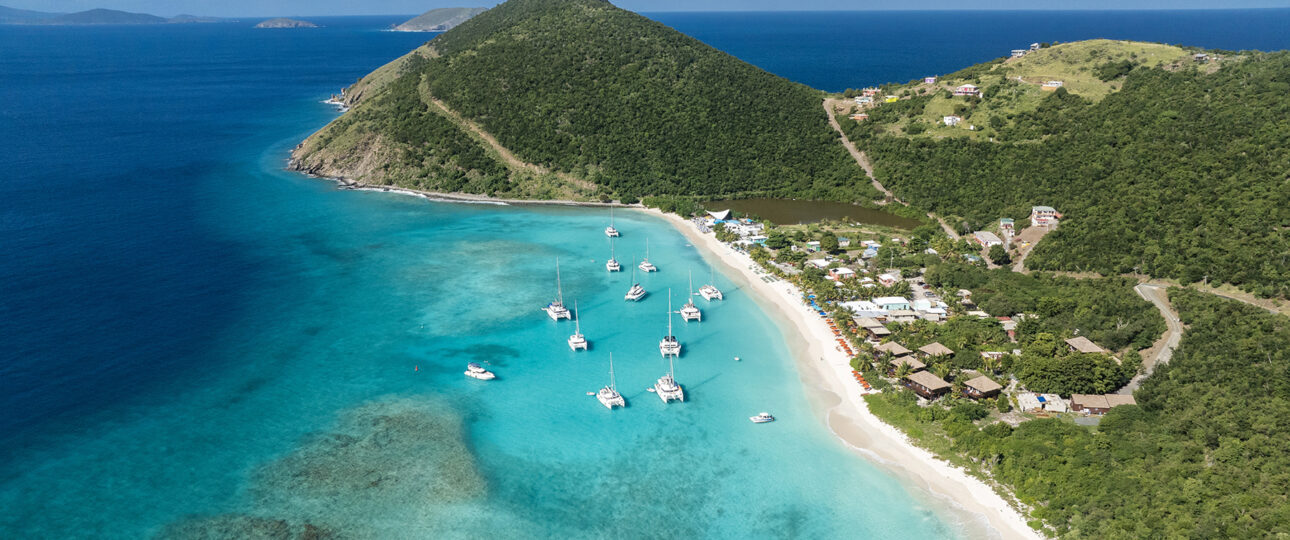
Captain Sergy: All right, the British Virgin Islands in the Caribbean. Let me explain why we do this trip. It was on my bucket list for a very long time, because every sailor eventually wants to have sailed those waters; a lot of people call it the world capital of sailing. We go there only once a year and only with one yacht, a catamaran, so it's still something unique and not mainstream. These are our real pictures, mostly from my phone, not stock photos and not edited.
We go in January. January is high season in the Caribbean, well away from the bad-weather season. It's dry and sunny, but not too hot; you'll see clouds in some pictures, which makes it very pleasant. There's a good mild wind, so you can use the sails. At exactly the same time Europe is grey and cold, while in the BVI you can expect around 27 to 30° and warm water for swimming.
The route. We start on the main island, Tortola; the international airport is about 30 minutes from our base. The BVI has a lot of islands, bigger and smaller, inhabited and not, and they're close together, which makes it an ideal sailing area. We don't need to sail half a day or a whole day, so we can spend the time snorkelling, swimming and exploring ashore. Remember that the final route depends on the actual weather. We can change the order of the islands or the plan; we always do that to stay comfortable rather than fight for the original plan and suffer.
Let's do a virtual tour. Norman Island is one of my favourite bases, because it has a lot of caves, lit from below by sunlight. Just off the island there are four very special pinnacle rocks with corals below, called the Indians. We always go there: once we drop anchor, grab a mask and go and explore the coral reef in warm water. You'll never get cold there. Then we can visit the famous Willy T bar: right next to the island there's a barge converted into a bar, running since 1989. There's no dock, so you either swim there or come by dinghy, the little motorboat we always have with us. The famous thing to do is jump from the top deck and take a photo of it.
Next is Cooper Island, a small, off-grid island where all the electricity comes from solar panels. It has some interesting places, like a rum bar that holds over 350 rums to taste. Our trip isn't alcohol-driven, but it makes sense to taste a little of the variety of rums from all over the world; I've only seen that there. And again, reef snorkelling. Reefs mean super clean, clear, warm water, because corals don't like cold or dirty water. You can take a GoPro with you.
Next is Virgin Gorda, for me one of the most interesting islands. Imagine a maze of house-sized granite boulders piled along the shore, making a labyrinth of caves and tide pools. You can climb, crawl and swim around, and they also form the famous Devil's Bay. It's a magnificent place to see and experience, and it makes a sailing trip diverse: you don't sit on board all the time. We go ashore every day to places like this, walk, explore, maybe try a local snack or buy a souvenir handmade by locals, not from a supermarket.
Next is Jost Van Dyke, which has several interesting places. The picture you see is one I took earlier this year: the Bubbly Pool, a natural jacuzzi made by the Atlantic swell. Imagine going to a spa like that in January; I bet you can't do that in Europe. Then there's the famous Soggy Dollar Bar. There's no dock on Jost Van Dyke, so you jump off the boat, swim to the bar and pay for your drink with wet money, which explains the name. They say they invented the famous Painkiller cocktail, so it's definitely something to try.
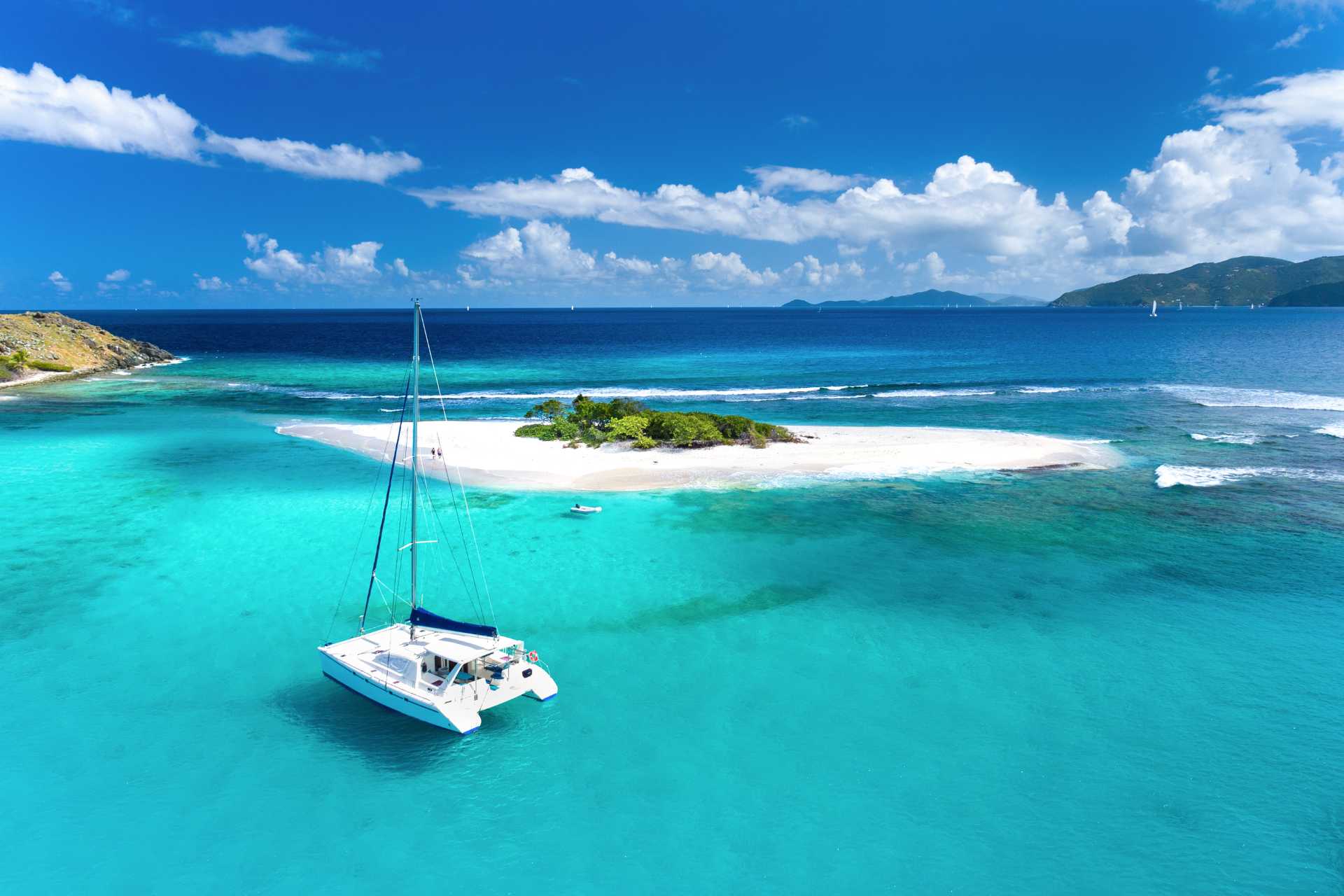
Probably the highlight, the gem, is Sandy Spit. When we were there, it looked like a heart; that's our real photo. I always fly the drone and take pictures of the team, the catamaran and the places. It's a tiny sandy island with a few palms on it, like something from a cartoon, and it changes shape every few days. When we were there, it looked like a heart. It was just astonishing.
Then the big island, Tortola. When we finish sailing, I really recommend exploring Tortola itself. It has an evergreen rainforest on Sage Mountain, and distilleries, because it's rum-making territory, for example Callwood, a distillery run by the same family for four generations. There are lots of spots to explore before or after the trip, so you're welcome to come early or stay a few days after sailing. That makes a lot of sense.
23:32 Life on board
Captain Sergy: Now let's talk a little about life on board. Remember, in the BVI we go with only one catamaran, so it will be an exclusive, unique trip: eight people, maybe one co-skipper, so up to 10 on board in total. Food and drinks are funded by a shared kitty, which goes to our sailing expenses. We cook together, and sometimes we don't need to cook at all because we go ashore and try something local. We live like a community. You never need to cook just for yourself or clean only your own dish, and I'm not the only one who drives the yacht. Everything can be shared: everybody takes part in the cooking from time to time, and everyone who wants to can learn to steer and work with the sails. I give sailing lessons, which are optional. You can learn a lot about the art of sailing, but it's not mandatory; it's up to you.
I'm also a keen freediver, and I can teach you how to go down along the coral reefs on a breath-hold. You're welcome to join my freediving master class if you wish. People discover it and are astonished by the abilities of the human body. We don't do it in the Mediterranean because the water is much colder, but in warm waters like the Caribbean Sea or the Indian Ocean we definitely do. How does that sound to you? You can share in the chat if you'd like it.
25:39 Our philosophy: no passengers on board
Captain Sergy: Now our philosophy. The main thing about our trips is that there are no passengers on board. Everyone becomes a crew member, part of the sailing team. It's not a luxury trip, so don't expect people running around you doing jobs. We don't have strangers on board; it's just our sailing team, the yacht, the sea and nature. That's why it's so much more relaxing and special. We share meals, we share cooking, and we share driving the yacht if you wish. In my opinion, and in the opinion of a lot of people who've joined our trips, it's a much better setup. Even when we have a chef on board, it doesn't make it a luxury trip, and it doesn't bring that boring all-inclusive vibe. You're still part of the sailing team; with a chef there's just a little more service to enjoy. And in any case it's not hard work. You don't need to know about sailing, be trained or be licensed.
For me, it's all about people: how we meet and how we spend time together. My favourite moment is after a day of sailing activities. We stop before sunset and sit on the yacht watching the sun go down, discussing interesting topics and ideas, sharing emotions. I'm still amazed how a group of strangers becomes so connected by day three. It's not possible to achieve the same on land; it's some kind of magic. People tell me they learn a lot from each other: they discover unique jobs and interesting lives. It's a sharing of cultures, and everybody gets a lot of insights. I've also seen people find partners, some for life and love and some for business. We even started a separate trip for singles, because it's so much fun to be with like-minded people. Our trips are about expanding your mindset.
28:26 Seychelles: route and highlights
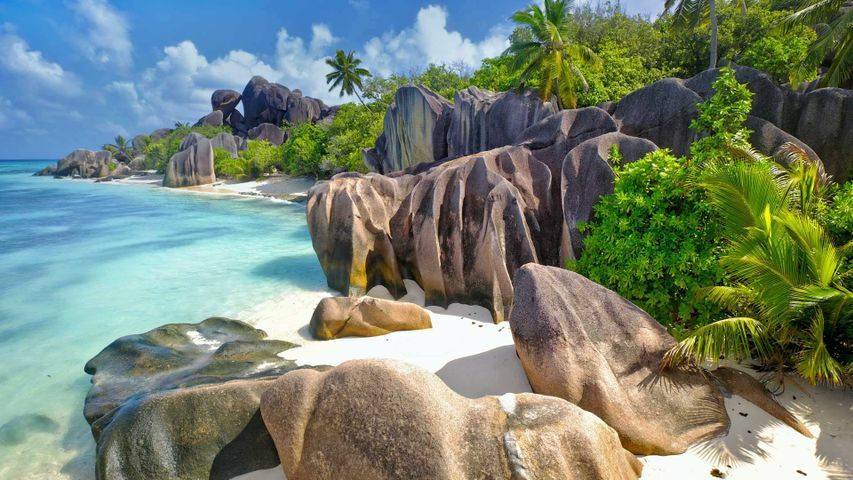
Captain Sergy: Now let's talk about the Seychelles. We sail the Seychelles in February, from the 20th to the 27th. The Seychelles is a really unique place on Earth. These aren't typical sand-and-coral islands like most tropical islands; they're granite. Imagine giant, very smooth boulders on pristine white beaches, with the jungle starting right behind them and running down to the water. It looks like the pictures from those old adverts for coconut chocolate bars or coconut shampoo, with that perfect sandy beach in the background. And in our European winter the weather there is very pleasant: around 30° air and around 29° water, so you can swim non-stop. It's not that windy, so it's different from the BVI; it's much calmer. I'll explain more when I compare them side by side.
The route. We start on the main island, Mahé. Remember, our route is never completely fixed, so we can adjust it. Let's take a little virtual tour. We'll visit La Digue. La Digue is unique because there are no normal cars, so we get around by bicycle. We usually spend the whole day there: we grab the bicycles and ride to the coconut and vanilla plantations and to one of the top beaches in the world, one of the most photographed beaches anywhere. It takes about 20 minutes of cycling through the jungle, so the trip to the beach is already exciting. If you're not great on balance, they'll give you a tricycle; if you don't have the power to pedal, you can take an electric bike; or you can relax completely and rent an electric golf cart with a driver. There are many options.
The next island is Curieuse, one of my favourites, because it's the home of the giant tortoises. They're about five times heavier than me and up to two metres long, and you can find tortoises this size only in the Seychelles and the Galápagos, nowhere else in the world. They're used to people, so they come close, and they really enjoy it if you scratch their heads. We can walk through the mangroves on a specially built boardwalk. There are no ports, so we anchor, go ashore and go straight off exploring.
Next is Praslin. I took this picture two years ago; we go to the Seychelles every year between January and March. Praslin is the home of the biggest seed in the world, the coco de mer, which grows wild only there. You can also see the very rare black parrot in that forest. We usually call a guide who takes us through the jungle and explains the history, the plants and the animals.
32:52 A chef on board in the Seychelles
Captain Sergy: What's unique about the Seychelles is that we have a chef on board. We always invite a local chef who cooks every meal and also does all the dishes, so there's more time to relax. The food there is so special: Creole food, lots of fresh fish, tropical fruit salads and a lot of other specialities. By the way, the fish you see in the picture is one we caught ourselves; it's fishing in paradise. So you don't need to spend time in the kitchen. There's more time to relax, snorkel, drive the catamaran and watch those fishing lines.
Earlier this year it was also the perfect place for improvised picnics. One morning we took everyone from three catamarans to a sandy beach, and the chefs made a fruit salad and a light breakfast for all of us together. Nobody expected it. It was perfect: eat, lie down, enjoy the warm sun and the warm water, and swim a lot.
Otherwise, life on board is the same as in the BVI. The catamaran can sleep up to 10 people, and you can expect optional sailing lessons and my favourite freediving master class.
34:56 BVI vs Seychelles: which one is for you
Captain Sergy: Now let me compare the trips side by side. What's the same? A catamaran and a small group of invited people only. There are no people who book online by accident, and no strangers. Around 80% come solo, experience isn't required, and it's mandatory to have a call with me before you book. But the vibe can be very different: different months, different sides of the planet, even different hemispheres.
The Seychelles is a tropical, peaceful, calm paradise with giant tortoises and a chef cooking for you. The BVI is the Caribbean sailor's dream, with ideal sailing weather and a true explorer vibe. So choose the BVI if you want to sail more and you're into exploration and that Caribbean mindset. Choose the Seychelles if you want to relax a bit more, you want the wildest nature, and you want a week where nothing is asked of you.
Some of you have already sailed with us, so if you don't mind, write your most memorable moments in the chat. And while you're sharing, we're ready to take your questions.
37:41 Guest story: Niall, 6 trips with us
Captain Sergy: Oh, we have Niall joining. Niall, how are you? Do you hear me?
Niall: Hi. I think I can hear you, I just can't see you, and I don't think you can see me.
Captain Sergy: It looks like the video isn't working, but may I ask you a couple of questions anyway? First, where did you sail with us?
Niall: I think I was with you six times. I did the BVI and the Seychelles with you, but also Greece, Sicily, the Canary Islands, and somewhere else, I'm sure. Lots of different places.
Captain Sergy: Then you're the perfect person to ask. You probably remember your first trip. What do you wish you'd known before joining? What did you learn that's important to know?
Niall: My first trip was a flotilla, seven boats around Sicily, so that was a big trip. What do I wish I'd known? It was intense: there was so much activity, so much action, so many people. There were quiet times as well, but it was a high-energy trip. And a lot of the trips after that, like the BVI and the Seychelles, are different: you're in paradise, you want to relax, you want to chill out, and that's exactly what you do. It's a completely different type of trip. So what I took away is that you can have such a range of vibes and experiences on the different trips. Every sailing trip isn't just being on a yacht in the sun on the sea. It's much more than that, and there's a lot more variety. That's the thing I wish I'd known beforehand. And bring sun cream. Always bring sun cream, because the sun is pretty strong. And a hat.
Captain Sergy: Yes, a good hat and sunblock, because you're much more exposed to nature than in the city, sitting in an office or at a computer. One more quick one: what are your most memorable moments from your trips? What do you still think about?
Niall: That's a harder question, because every trip has five or six really memorable moments, so it's hard to pick even one or two. Probably one from the first trip. We were sailing around the volcanic islands, Stromboli was one of them, and one night we got up early and sailed to a viewpoint to watch the eruptions. We could actually see the lava being thrown up into the air against the black night sky. That really stuck in my mind, and lots of people got terrific photos and video of it. And then, you showed the fish: the fishing was great, and the wildlife is always good. I could talk for an hour about that stuff, but I won't.
Captain Sergy: Thanks a lot for sharing, Niall. I clearly remember those moments as well. I hope I'll see you again. You're always welcome to sail more, because we don't often repeat destinations; we keep adding new ones.
Niall: Yes, it was great. Thanks a lot, and sorry about the camera.
42:52 What's included and how to book
Eva: Now maybe the most interesting part for some people: the price, booking and flights. First, what's included, because that's very important to understand. The yacht charter; a motorboat, the rubber dinghy you may have seen in our pictures, which is really handy because we always stay at anchor; yacht insurance; a licensed captain; sailing lessons from your captain; the freediving master class; final cleaning; and bed linen and towels, so there's no need to bring any.
Your additional budget: food, drinks and fuel are always covered by the shared onboard kitty, and the final amount is known at the end of the trip. Also your flight tickets and a refundable security deposit. Sergy will explain all the details on the call. Restaurants and tours ashore, if you want them, aren't included either.
[Prices and availability discussed here change over time. See the trip pages.]
For these exotic trips we keep the groups very small. Usually we sail with two or three yachts on a trip, and our flotillas can have five, seven or nine yachts sailing together, but these exotic trips are very exclusive in terms of the number of people. That's our choice for these destinations. For the Seychelles, everything included is the same as for the BVI. Our returning guests often want to book trips like these even before there's a web page for them, so some places are already booked.
48:06 Next step: a call with captain Sergy
Eva: So what's the next step? You watched this webinar and thought, that's nice, but I have to think, or talk to my boss or my partner, or find someone to look after the kids. I have a kid too, so I know. By the way, I'm going to the Seychelles as well, so see you there. Your next stop is to book a call with captain Sergy. It's not a sales call and it's not an interview. It's 15 to 30 minutes, maximum, to talk with Sergy and find out who's coming. I guess every one of you is curious who will be in your small group; that's very important information. Sergy will tell you about your group, about cabin options and arrangements, how you sleep and how everything works. It's a personal check-in, to understand whether we're on the same wave and to make sure you have the right expectations, even after watching this webinar and reading all our reviews. So don't think of this call as something to book once you're ready to book the trip. My sincere advice is to book it as soon as you think, "I want to go there." Maybe you've seen the reel on Sergy's page: one day, or day one. You choose.
Lots of people who've sailed with us on other trips left comments, from Tenerife, Ibiza and Croatia. Thank you for coming! If you have any questions, our trip coordinators will be in touch with you, and Sergy will answer all your questions on the call. Sergy, any last words?
Captain Sergy: I think you've worked hard this year, so you've earned something for yourself, like a week like this. I see a question: do you know a cheaper option? I guess that's about flights. Feel free to do your own search, because it always depends on where you're flying from. Our trip coordinators will be happy to help and advise on tickets.
Eva: And on the call too: Sergy is great at booking tickets, because he flies about ten times a month. Okay, we're wrapping up. Thank you for coming, new people and members of our community. Thank you for your support. Have a nice evening, or day if you're somewhere outside Europe. Bye!
Why sail the exotics
Your problems stay on shore
No inbox, no traffic, no to-do list. For seven days the only question is which island is next. Most people see the Caribbean or the Indian Ocean from a resort or a cruise ship; on a small catamaran you anchor where the big ships can’t go, and your home travels with you.
What’s in the recording: tap a time to jump there
Both islands stop by stop, then a guest’s story
- 0:00
Welcome and plan for today
Eva from the Elmár Sailing team on what the webinar covers and why it’s your chance to “interview” us.
- 6:29
Why sail the exotics
Escaping the routine, and what a yacht can do that a resort or a cruise ship can’t.
- 10:37
About Elmár Sailing and captain Sergy
8 years, 700+ guests, 110+ sailing weeks, invite-only trips and a captain who swapped IT for the helm.
- 15:54
British Virgin Islands: route and highlights
Norman Island’s caves, the Willy T, Cooper Island, The Baths on Virgin Gorda, Jost Van Dyke and Sandy Spit.
- 23:32
Life on board
The shared kitty, cooking together, optional sailing lessons and the freediving master class.
- 25:39
Our philosophy: no passengers on board
Why everyone is crew, and how strangers become close by day three.
- 28:26
Seychelles: route and highlights
Granite islands, bicycles on La Digue, giant tortoises on Curieuse and the coco de mer on Praslin.
- 32:52
A chef on board in the Seychelles
A local chef cooks every meal: Creole food, fresh fish and tropical fruit.
- 34:56
BVI vs Seychelles: which one is for you
What’s the same on both trips, and how the two weeks feel different.
- 37:41
Guest story: Niall, 6 trips with us
What he wishes he’d known before his first trip, and the moments he still remembers.
- 42:52
What’s included and how to book
What the trip price covers and the costs to budget for on top.
- 48:06
Next step: a call with captain Sergy
A 15–30 minute call to meet your captain and hear who’s in your group.
Who these weeks are for
If one of these is you, you’ll fit right in
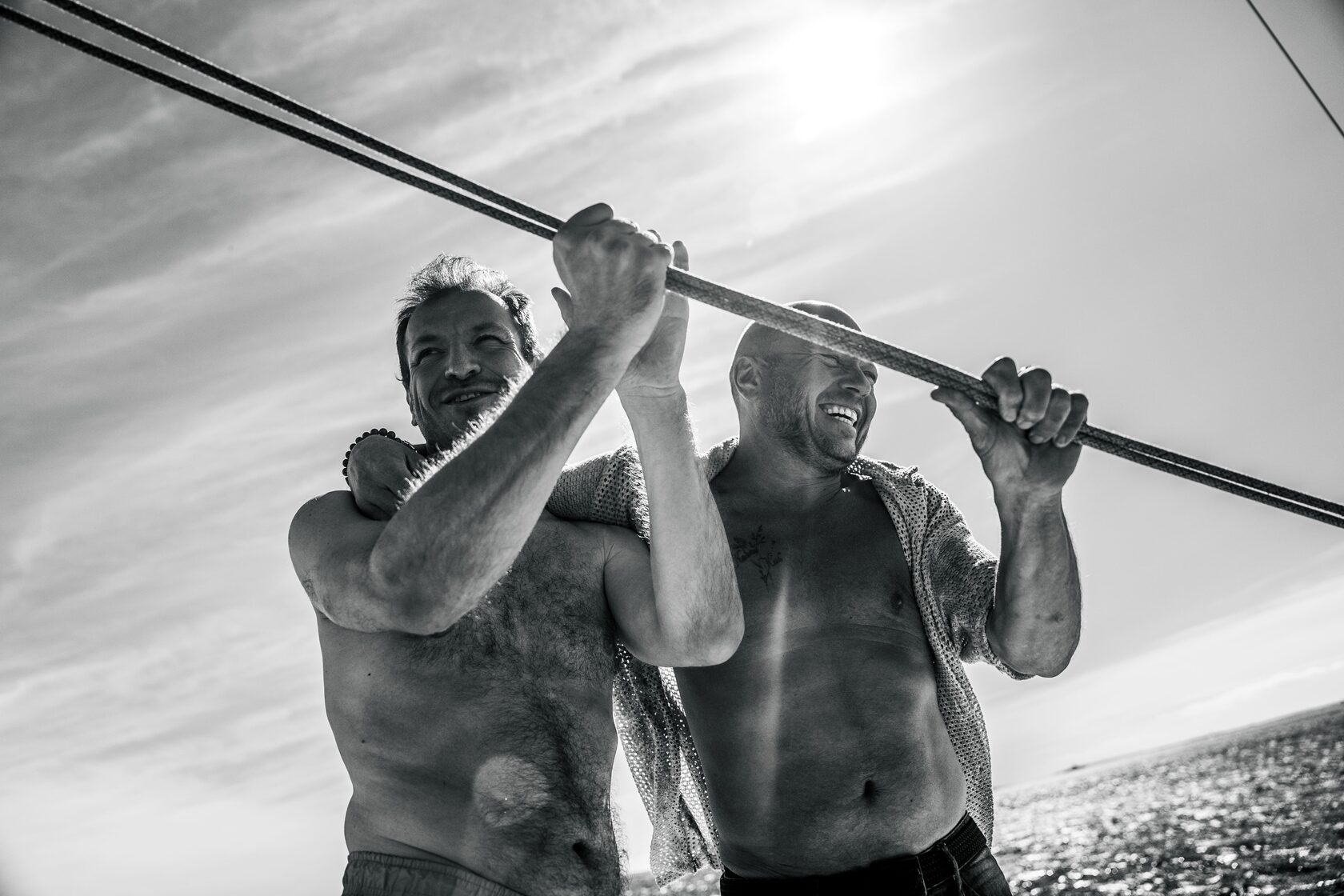
You travel solo
Around 80% of our guests come alone. Everyone has a call with captain Sergy first, so there are no strangers on board.
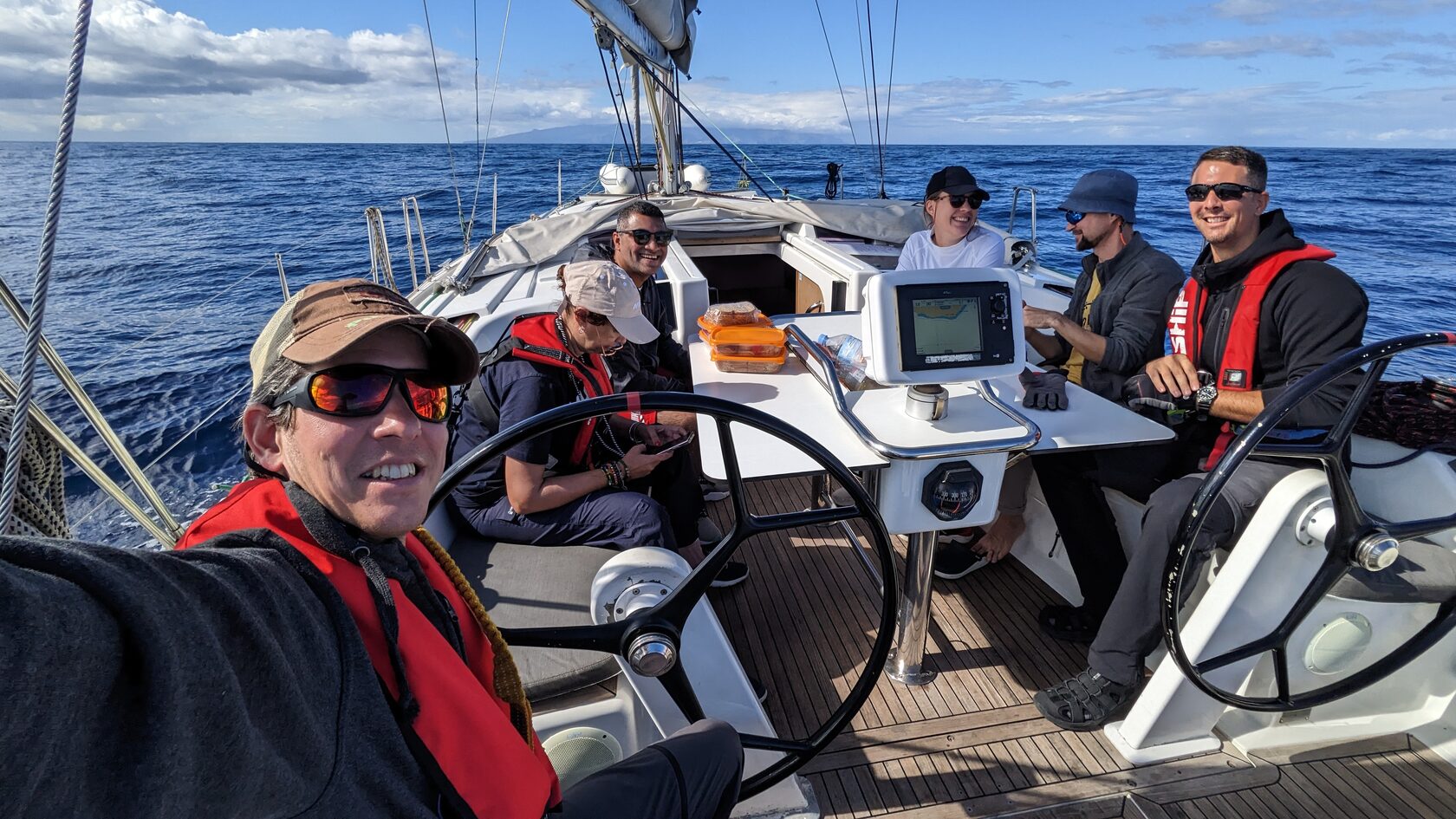
You’ve never sailed
No experience needed. The captain makes the navigation plan; sailing lessons are there if you want them.
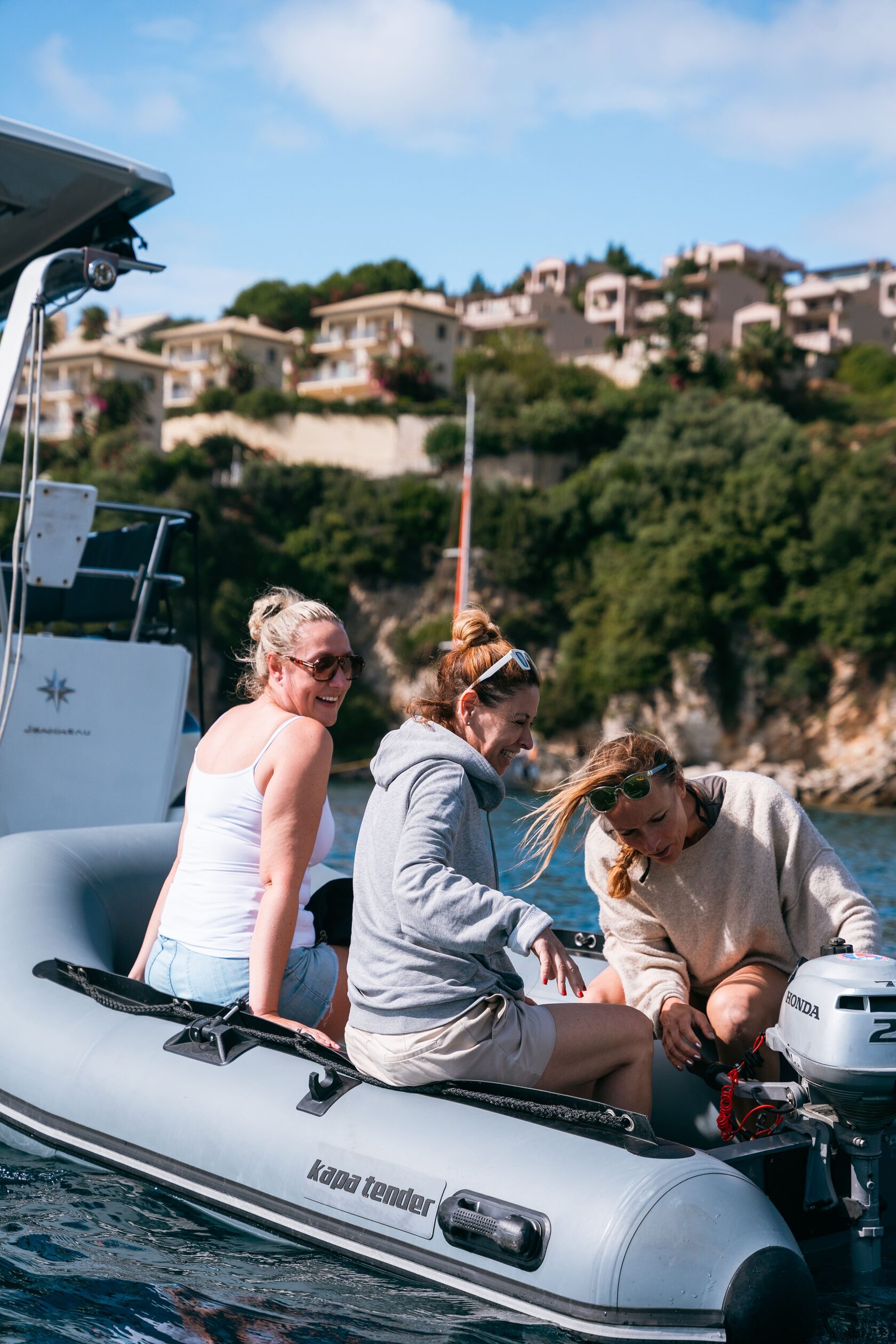
You’ve sailed with us before
You know the Mediterranean or the Canaries with us, and you want the next step: further, warmer and wilder.
BVI vs Seychelles
Same crew spirit, two very different weeks
What’s the same
A catamaran and a small, invite-only group. Around 80% come solo, no experience is needed, and everyone has a call with captain Sergy before booking. Optional sailing lessons and the freediving master class on both.
British Virgin Islands
The Caribbean sailor’s dream: ideal sailing weather and a true explorer vibe.
- Dry, sunny high season, around 27–30°C, mild wind for the sails
- Islands close together: short passages, more time to snorkel and explore
- The crew cooks together or eats ashore
Choose it if you want to sail more and love exploring.
Seychelles
A tropical, peaceful, calm paradise with giant tortoises and a chef cooking for you.
- Around 30°C air and 29°C water, calmer and less windy
- Granite islands, La Digue by bicycle, tortoises on Curieuse, the coco de mer on Praslin
- A local chef cooks every meal and does the dishes
Choose it if you want to relax more, the wildest nature, and a week where nothing is asked of you.
From a guest who sailed with us
“You’re in paradise, you want to relax, you want to chill out, and that’s exactly what you do. Every sailing trip isn’t just being on a yacht in the sun. It’s much more than that.”
Your host
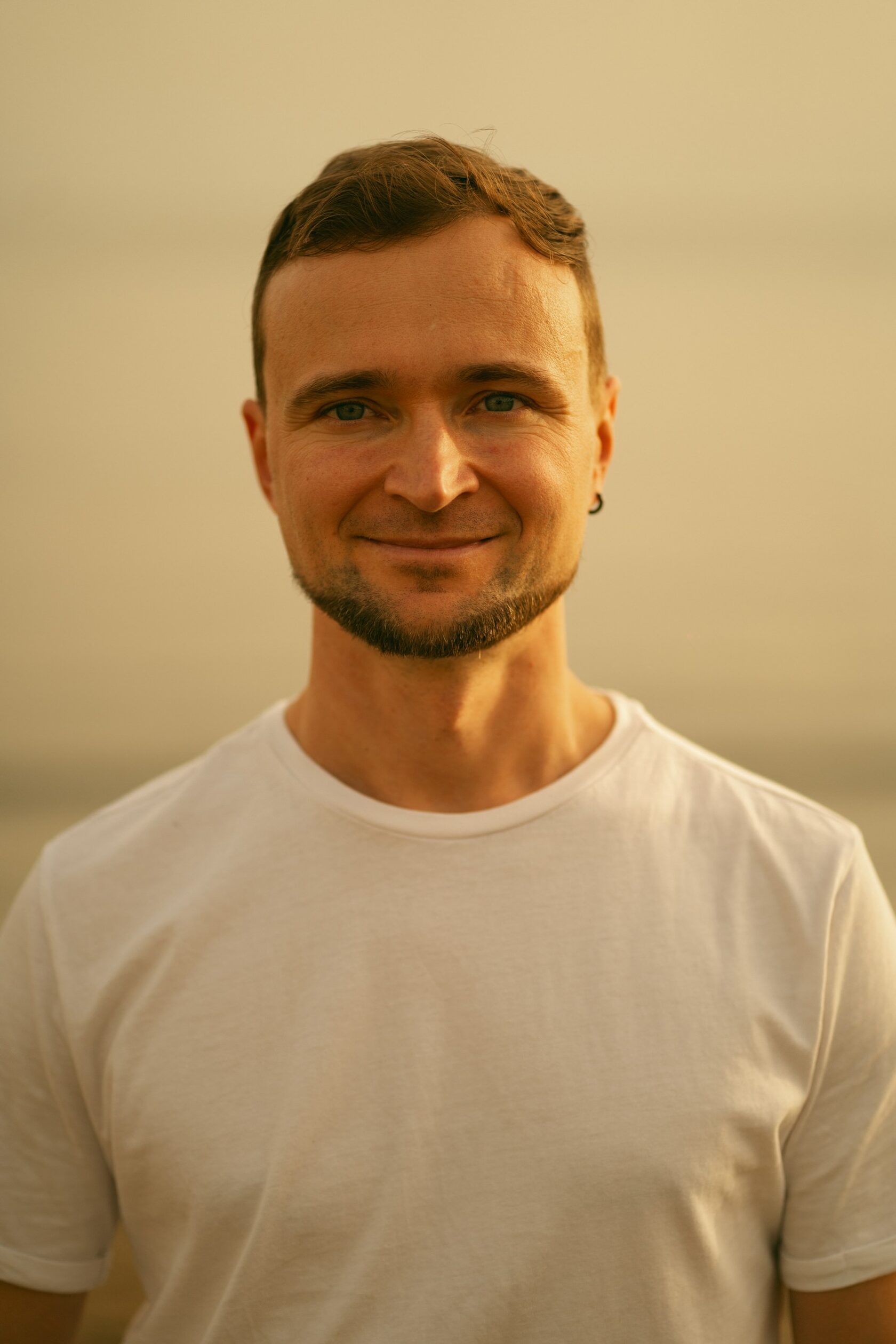
Captain Sergy Almer
Founder and main captain of Elmár Sailing. He left a successful career in technology for the helm, got his first sailing license more than 10 years ago in Ireland’s rough waters, and has sailed 25,000+ nautical miles as an RYA & ISSA licensed skipper.
He sails these weeks himself, teaches a freediving master class in warm water, and talks with every guest before a trip. In this recording he answers the questions guests usually ask in that call.
- Trip
- British Virgin Islands – Caribbean Winter Escape
- Dates
- 16–23 January 2027
- Start & finish
- Tortola, about 30 minutes from the airport
- Possible stops
- Norman Island, Cooper Island, Virgin Gorda, Jost Van Dyke, Sandy Spit, depending on the weather
- On board
- Catamaran, crew cooks together
- Group
- Small, invite-only, no experience needed
- Trip
- Seychelles – Granite Islands & Giant Tortoises
- Dates
- 20–27 February 2027
- Start & finish
- Mahé
- Possible stops
- La Digue, Curieuse, Praslin, depending on the weather
- On board
- Catamaran, local chef cooks every meal
- Group
- Small, invite-only, no experience needed
Questions about the two weeks
Is the recording free?
Yes. Watch it right on this page, no registration needed.
Do I need sailing experience to join a sailing trip in the BVI or the Seychelles?
No. In captain Sergy’s words: “You don’t need to be a sailor. You don’t need to be experienced.” He, or a colleague skipper when there is more than one yacht, makes a safe navigation plan and controls it. About 80% of guests are on their first trip with Elmár Sailing, and sailing lessons on board are optional.
Can I go on a sailing trip alone?
Yes. Around 80% of Elmár Sailing guests come solo. The trips are invite-only and everyone has a call with captain Sergy first, so, as he says, there are no strangers on board. The group is kept gender-balanced, and by day three it usually feels like a crew.
Which is better for a sailing trip, the BVI or the Seychelles?
It depends on what you want. Captain Sergy: the BVI is “the Caribbean sailor’s dream, with ideal sailing weather and a true explorer vibe”, so choose it if you want to sail more and explore. The Seychelles is “a tropical, peaceful, calm paradise with giant tortoises and a chef cooking for you”, so choose it if you want to relax more, the wildest nature, and a week where nothing is asked of you.
When is the best time to sail the British Virgin Islands?
January. It is high season in the Caribbean: dry and sunny but not too hot, around 27–30°C, with warm water and a mild wind for the sails. Elmár Sailing’s BVI week is 16–23 January 2027.
When is the best time to sail the Seychelles?
During the European winter. Captain Sergy sails there every year between January and March, when it is around 30°C with 29°C water and calmer, less windy conditions than the BVI. Elmár Sailing’s Seychelles week is 20–27 February 2027.
Is there a chef on board?
In the Seychelles, yes: a local chef cooks every meal and does all the dishes, with Creole food, fresh fish and tropical fruit salads. In the BVI there is no chef: the crew cooks together, sometimes eats ashore, and nobody has to cook just for themselves.
What’s included in the trip price?
The yacht charter, a dinghy, yacht insurance, a licensed captain, sailing lessons, the freediving master class, final cleaning, and bed linen and towels; in the Seychelles, the local chef too. Not included: flights, food, drinks and fuel from the shared onboard kitty, a refundable security deposit, and restaurants or tours ashore. Prices change over time, so check the trip pages.
How do I book a BVI or Seychelles sailing trip?
Book a call with captain Sergy. It is required before booking, because the trips are invite-only. As Eva says, it is not a sales call or an interview: 15 to 30 minutes to hear who is in your group, your cabin options and how everything works. Her advice is to book it as soon as you think “I want to go there”.
Free webinar recording
See both weeks before you choose
Fifty-two minutes with captain Sergy: both islands stop by stop, life on board, a guest’s story and how booking works.
Watch the recording